

5 Signs Your Child May Be Masking ADHD Or Autism
Some children do not show ADHD or Autism in ways that adults immediately recognise.
They may seem settled at school, manage friendships reasonably well or appear organised and capable. Yet behind that outward appearance, they may be working extremely hard to keep up with expectations, suppress behaviours or copy what other children are doing.
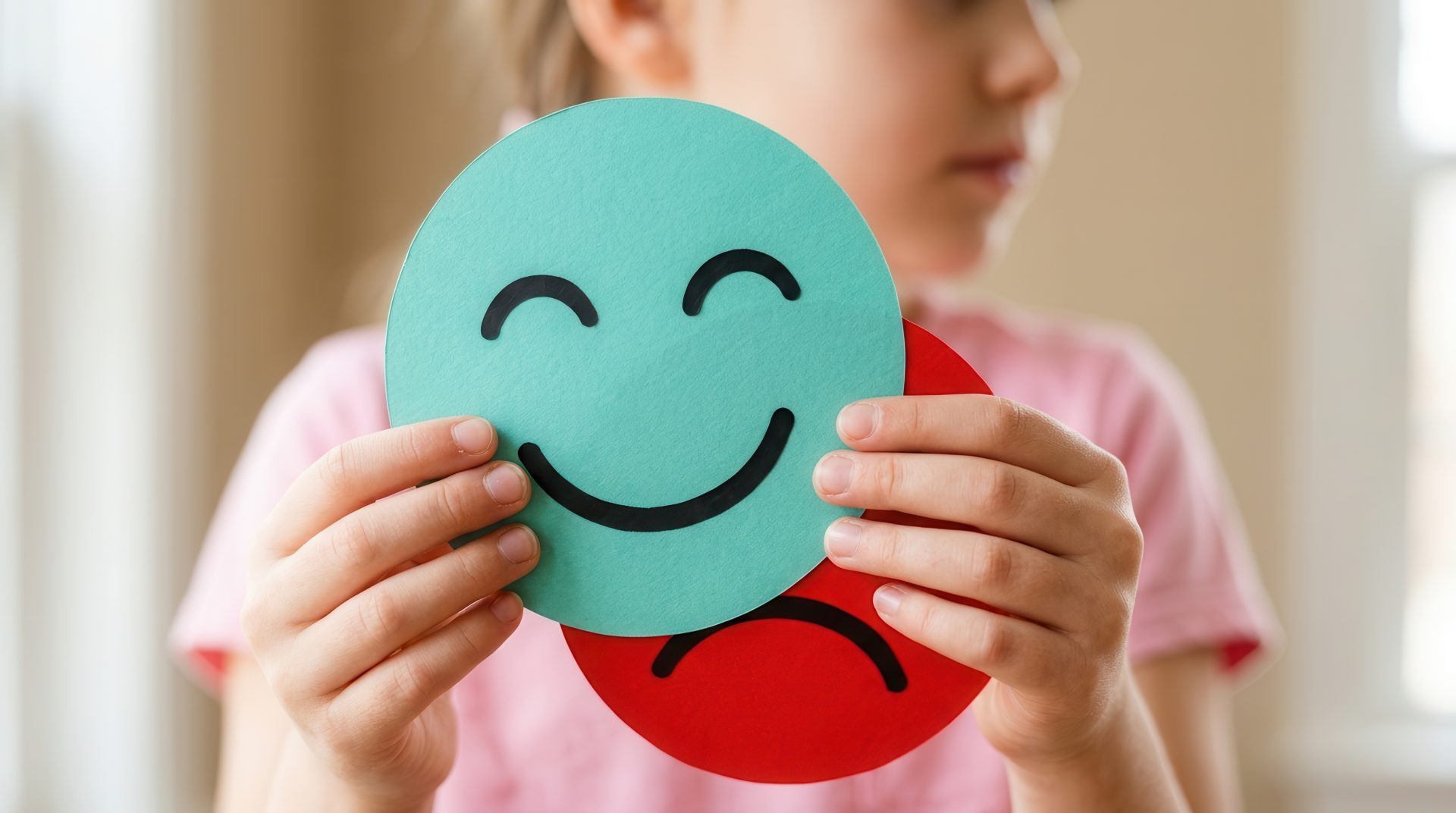
This is often described as masking or camouflaging. The NHS notes that some autistic people learn to adapt so their signs are less noticeable, and that this can make everyday situations exhausting or stressful.
Masking does not automatically mean a child has ADHD or Autism. But if you keep noticing a gap between how your child appears to cope and how they actually feel afterwards, it may be worth looking more closely.
What Does Masking Look Like In Children?
Masking can involve hiding, suppressing or compensating for behaviours that might otherwise make a child stand out.
For an autistic child, that could mean copying how other children socialise, rehearsing conversations or staying quiet when they are unsure what to do.
For a child with possible ADHD, parents may notice similar compensating behaviours, such as working extremely hard to stay organised, suppressing movement or constantly checking themselves before speaking.
Research into masking is much more established in Autism than ADHD, so it is important not to treat these behaviours as diagnostic signs on their own. Studies also show that camouflaging is complex and can involve several different strategies rather than one clear pattern.
So, what might parents actually notice day to day?

1. They Seem Fine At School But Fall Apart At Home
This is one of the patterns parents often find hardest to make sense of.
A teacher may describe a child as calm, polite and well behaved, while home feels completely different.
After school, the child may:
- become unusually irritable
- cry over small requests
- need long periods alone
- seem exhausted
- become more sensitive to noise or touch
- struggle with homework or conversation
This does not necessarily mean the child has been masking. School can be tiring for lots of reasons.
What matters is whether there is a repeated pattern of appearing comfortable in one environment but needing significant recovery afterwards.
Instead of asking only, “Were they well behaved today?”, it can be useful to ask, “How much effort did it take them to cope?”
That distinction can reveal a lot.
2. They Watch Other Children Closely And Copy What Works
Some children learn social situations by observation rather than instinct.
They may watch how other children talk, joke, respond or join in, then imitate those behaviours to avoid standing out.
You might notice your child:
- copying phrases or expressions from friends
- adopting someone else’s interests
- waiting to see what other children do before responding
- rehearsing conversations beforehand
- relying heavily on one socially confident friend
- appearing socially comfortable but feeling confused afterwards
The NHS specifically notes that some autistic girls may copy how other children behave and play, appear to cope socially or stay quiet in situations they find difficult. It also makes clear that boys can mask too.
This is why having friends, making eye contact or appearing sociable should never be used on their own to rule Autism out.
Sometimes the more useful question is whether social interaction feels natural to the child or whether they have learned a set of strategies to get through it.
3. They Look Very Organised Because They Are Afraid Of Getting Things Wrong
Masking does not always look social.
Some children compensate for difficulties with attention, memory or organisation by becoming extremely careful.
They may:
- repeatedly check homework
- spend much longer than expected on simple tasks
- become anxious about forgetting equipment
- follow routines very rigidly
- rely heavily on lists and reminders
- avoid answering unless they are certain
From the outside, this child may look highly organised.
The important question is how much effort it takes to maintain that appearance.
For example, a child who never forgets their PE kit might appear to have no organisational difficulties at all. But if they have checked their bag six times the night before, written three reminders and spent the morning worrying about it, there is a different story underneath.
This does not prove ADHD. Anxiety, personality and other factors can produce similar behaviours.
But when parents are noticing several less obvious ADHD symptoms in a child, these compensating habits can be part of the wider picture.
4. They Hold Back Movement, Impulsivity Or Behaviours That Help Them Regulate
A child may quickly learn which behaviours adults consider acceptable.
They might force themselves to sit still, stop fidgeting, hold back questions or suppress repetitive movements because they do not want to draw attention.
That can create a striking contrast between school and home.
At school, they may sit quietly through lessons.
At home, they may pace, jump, talk constantly or move from one activity to another.
Both versions of the child can be genuine.
The difference may be that one environment requires much more effort and self-monitoring.
Research into autistic camouflaging has identified strategies including imitation, suppressing behaviours and deliberately modifying how someone presents socially.
Parents do not need to label every movement or behaviour as masking. It is more useful to notice whether your child seems to spend large parts of the day actively monitoring themselves.
5. Everyday Social Situations Leave Them Completely Drained
Sometimes the strongest clue comes after the event.
A child may get through a school day, birthday party or family gathering without any obvious problem, then need considerable recovery afterwards.
They might:
- retreat to their bedroom
- become unusually quiet
- be much more emotional
- struggle with ordinary requests
- need familiar routines
- become more sensitive to sound or touch
- have very little energy left for homework
This is not the same as simply being tired.
The pattern becomes more meaningful when activities that look straightforward from the outside repeatedly leave the child exhausted or distressed.
The NHS notes that masking can make everyday activities feel stressful and exhausting.
For parents, this can be a useful reminder not to judge how demanding an experience was purely by how the child looked while it was happening.
Why Are Masking Signs So Easy To Miss?
Adults naturally notice behaviours that are visible.
A child who interrupts constantly, struggles visibly with friendships or cannot remain seated is more likely to attract attention than a child who has found ways to hide those difficulties.
Children who are academically capable or verbally confident may therefore be particularly easy to overlook.
NICE advises professionals that Autism can be under-recognised in girls and that signs in older children may previously have been masked by coping strategies or supportive environments.
That does not mean every quiet, perfectionistic or exhausted child is autistic or has ADHD.
It means outward behaviour is only one part of the picture.
What Should You Do If This Sounds Familiar?
Try not to turn the five signs above into a checklist.
A better starting point is to look for patterns.
You may find it useful to notice:
- whether home and school behaviour differs significantly
- which situations leave your child most tired
- whether they describe trying to fit in
- whether friendships require a lot of effort
- whether they rely heavily on routines or preparation
- whether concerns are affecting learning, wellbeing or family life
You can also compare observations with your child’s teacher or SENCO.
Sometimes the most useful information comes from putting several environments together rather than relying on a single account.

Frequently Asked Questions
Can Children Mask Autism At School?
Yes. Some autistic children may compensate for or suppress differences at school, making signs less obvious to adults. NICE specifically recognises that coping mechanisms and supportive environments can mask signs.
Is Masking More Common In Girls?
Masking is often discussed in relation to autistic girls because their signs can be less obvious and Autism may be under-recognised. However, children of any gender can mask.
Can ADHD Be Masked Too?
Children can develop strategies that compensate for difficulties associated with ADHD, such as suppressing movement, overpreparing or carefully monitoring impulsive responses. These behaviours are not enough on their own to establish an ADHD diagnosis.
Should I Arrange An Assessment If My Child Masks?
Not necessarily. It may be worth exploring professional advice when there are persistent concerns about communication, attention, behaviour, social development or emotional regulation that are affecting everyday life.
Look At The Effort, Not Just The Outcome
A child can appear to be doing well and still find everyday expectations unusually demanding.
That is why masking is worth thinking about as a pattern rather than a checklist.
If your child repeatedly seems to cope in public but struggles afterwards, copies others to navigate social situations or spends large amounts of energy staying organised and controlled, try to understand what those strategies are costing them.